Cellular health basics
Sulforaphane and cellular health: how defense works
Explore how sulforaphane relates to cellular defense genes through KEAP1–NRF2 signaling, from reactive oxygen processing and antioxidant regeneration to human studies.
01
Cells maintain balance every day
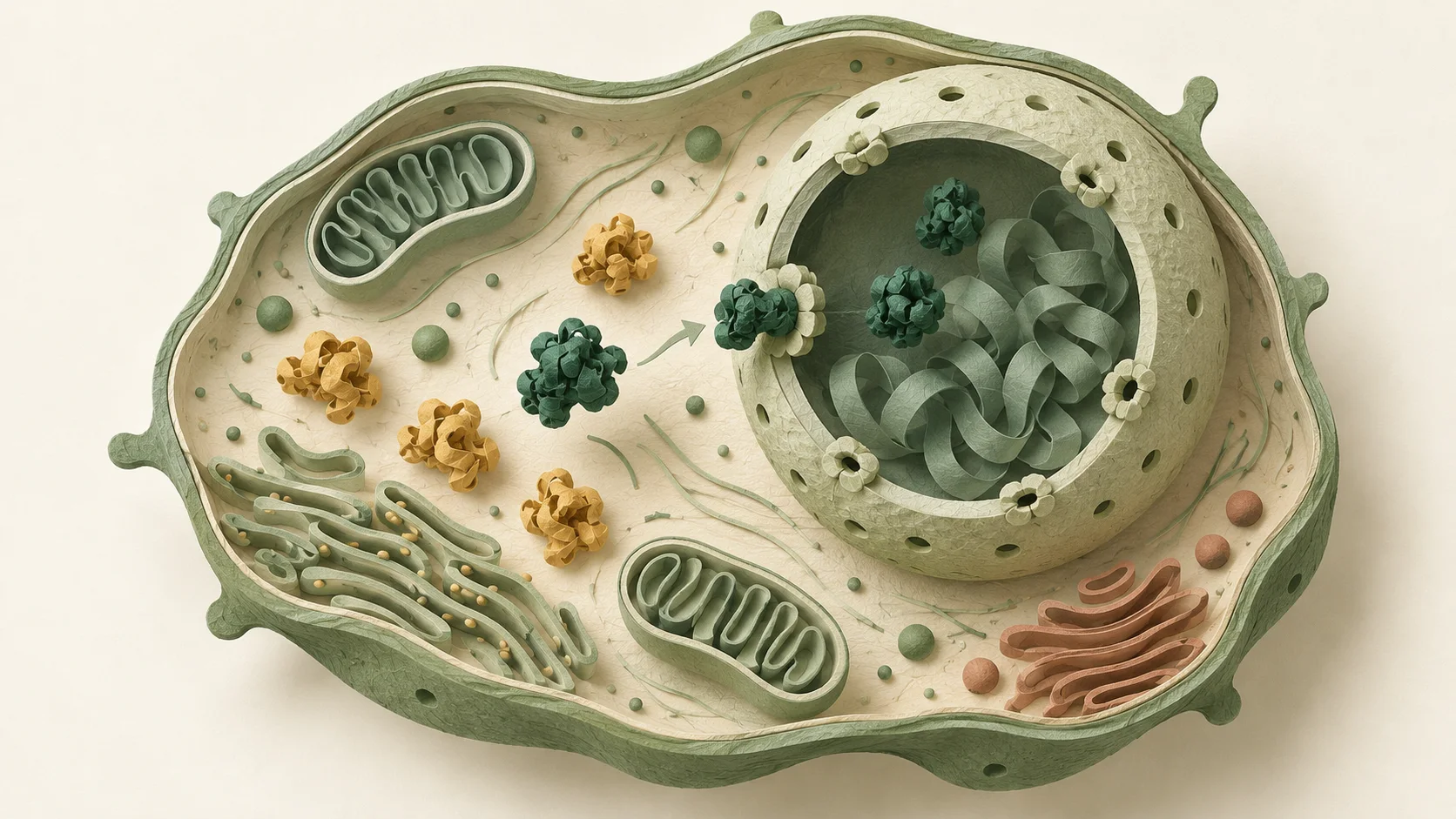
Cells make energy and proteins and respond to changes around them. Oxidation and reduction reactions occur throughout these activities. Reactive oxygen species arise as part of this work and also take part in signaling. If their production and processing become unbalanced, oxidative stress can damage proteins and lipids.
Cells use antioxidants and enzymes to regulate their internal environment. Sulforaphane is studied because it affects gene responses in this defense system. Nrf2 is a starting point for understanding this connection.
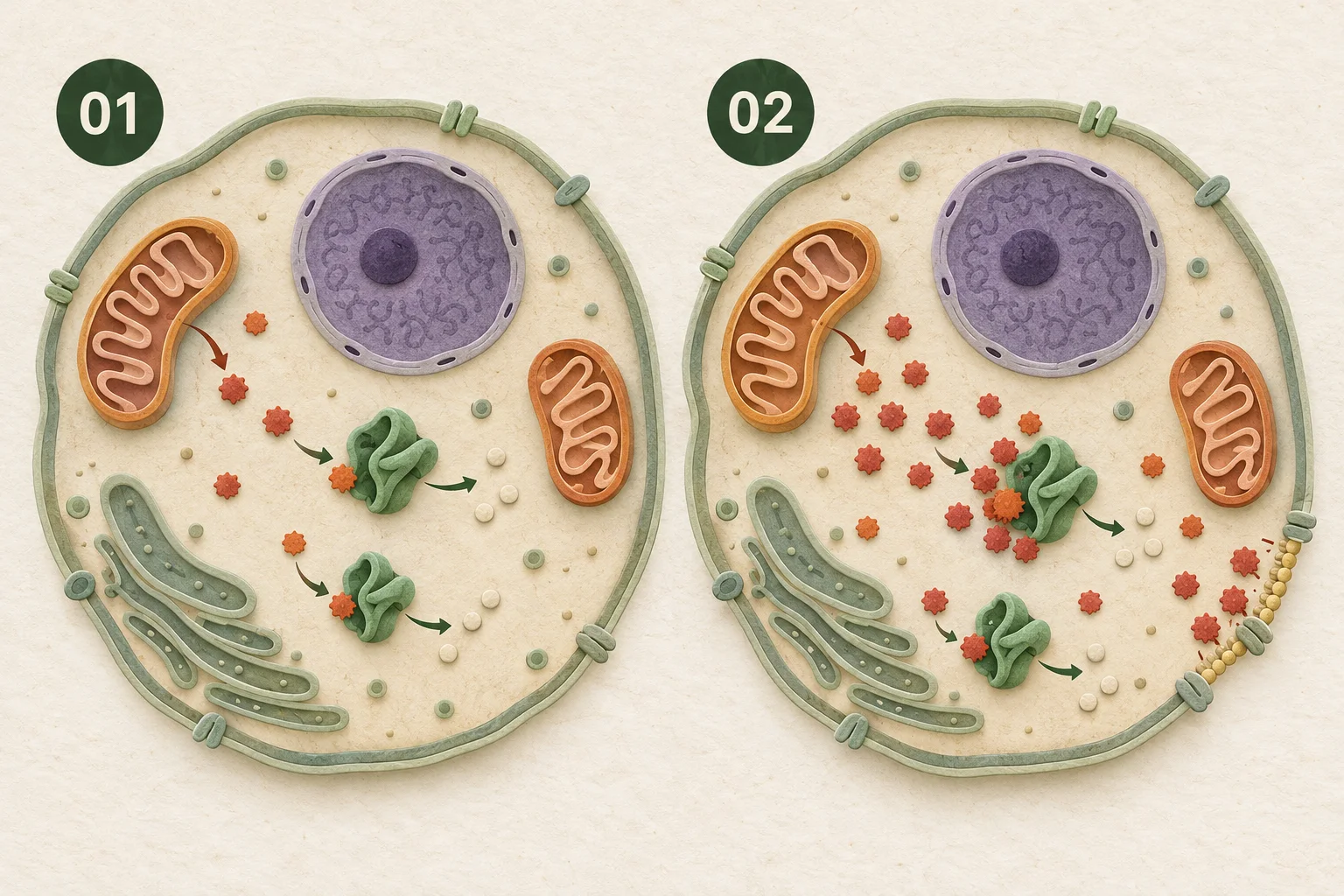
Cells balance how quickly reactive oxygen species are made and processed.
- Balanced production and processing
Enzymes and antioxidants regulate reactive oxygen produced during metabolism.
- Oxidative stress
When balance is disrupted, oxidative damage can accumulate in proteins and lipids.
02
Nrf2: a protein that regulates defense genes
Nrf2 is a transcription factor that helps cells read genes needed for defense. It acts at specific DNA regulatory sites in the nucleus and regulates genes involved in antioxidant reactions and metabolism.
KEAP1 normally helps regulate Nrf2 abundance. Together with a protein complex containing CUL3, KEAP1 helps mark Nrf2 for breakdown by the cell’s protein disposal machinery. Balancing production and breakdown helps set the level of cellular defense response.
03
Three stages from sulforaphane to defense response
Sulforaphane can react with cysteine sites on KEAP1. Hu and colleagues analyzed purified KEAP1 and found modification at several cysteine residues, including C151. These sites help sense chemical changes inside cells.
This signal affects how Nrf2 is marked for breakdown. In cell experiments by Zhang and colleagues, sulforaphane inhibited KEAP1 mediated marking of Nrf2. Nrf2 that avoided breakdown accumulated and could act in the nucleus.
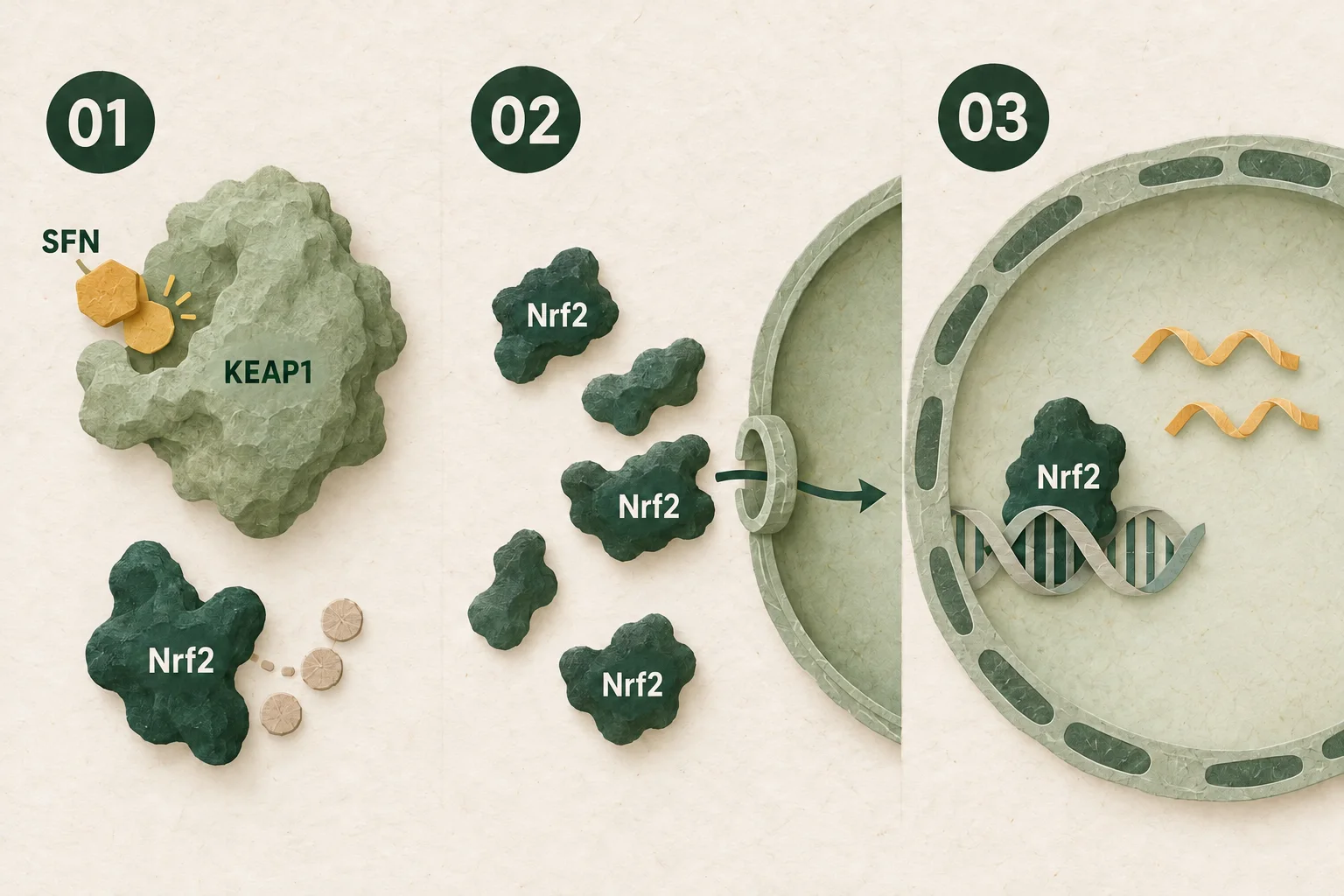
From KEAP1 sensing to Nrf2 action in the nucleus.
- KEAP1 sensing
Sulforaphane acts on reactive cysteine sites and affects marking of Nrf2 for breakdown.
- Nrf2 accumulation and movement
Nrf2 that avoids breakdown accumulates and can act in the nucleus.
- Defense gene regulation
Nuclear Nrf2 works with other factors to regulate antioxidant and metabolism genes.
04
Multiple antioxidant and defense systems work together
Cellular antioxidant defense is shared across substances and enzymes. Some enzymes process reactive oxygen, some antioxidants take part in those reactions, and other enzymes regenerate used antioxidants. Glutathione and thioredoxin–peroxiredoxin systems are major examples.
SOD converts superoxide into hydrogen peroxide and oxygen. Catalase, glutathione peroxidase (GPX), and peroxiredoxin (PRX) then process hydrogen peroxide. Glutathione and thioredoxin used in those reactions are regenerated by reductases using electrons supplied by NADPH.
Nrf2 studies examine several points in this chain. Comparing normal and Nrf2 deficient mice, Thimmulappa and colleagues identified genes involved in glutathione synthesis and regeneration and NADPH production. In mouse derived cells, Malhotra and colleagues identified Nrf2 targets including thioredoxin reductase and sulfiredoxin.
Soriano and colleagues observed increased sulfiredoxin gene expression after sulforaphane treatment in cultured neurons. Sulfiredoxin can restore some peroxiredoxins that lose activity after excessive oxidation. The research thus studies both preparing defense materials and restoring used systems.
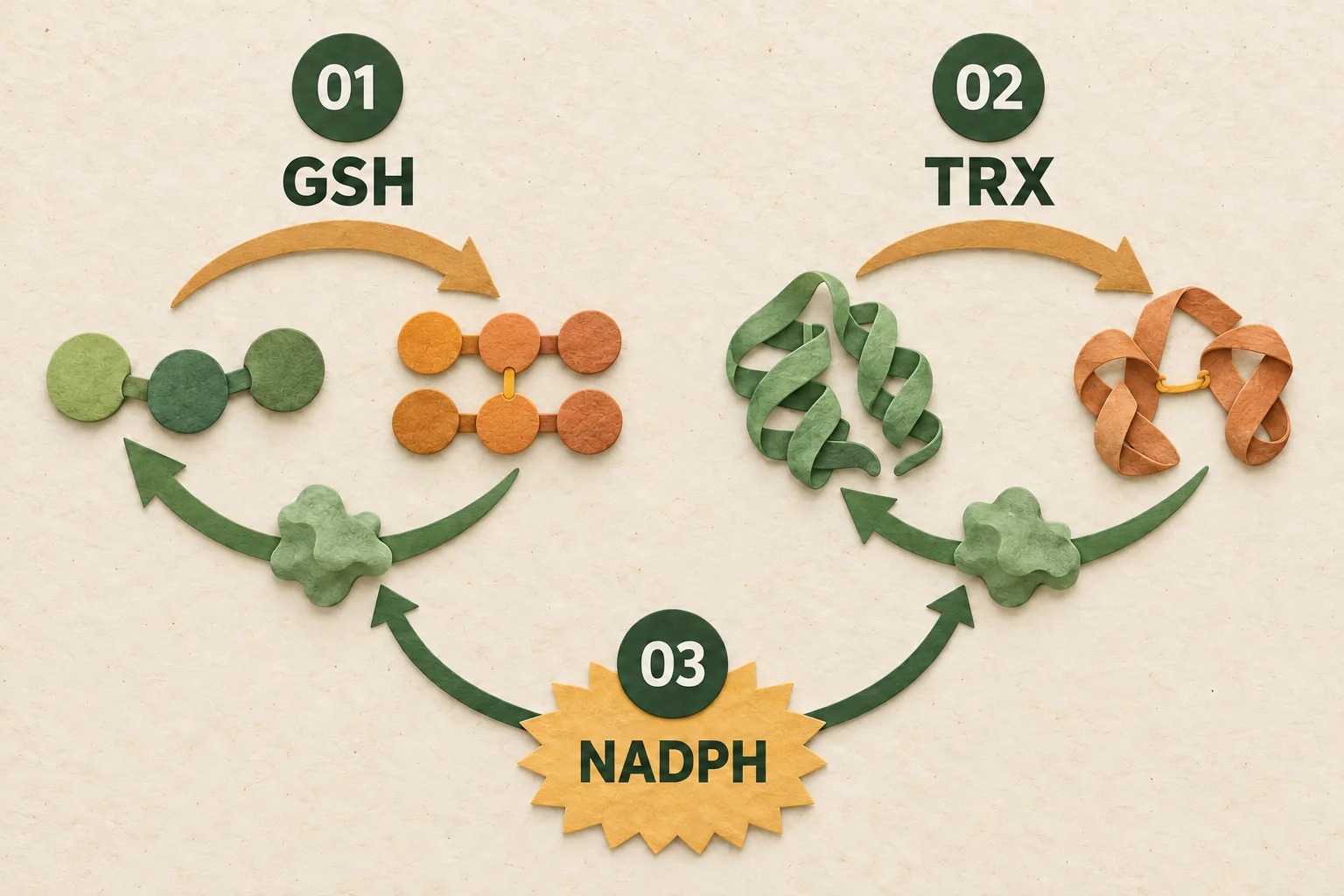
Used defense molecules must be regenerated for antioxidant reactions to continue.
- Glutathione system
Glutathione used by GPX is regenerated by glutathione reductase.
- Thioredoxin system
Thioredoxin involved in PRX function is regenerated by thioredoxin reductase.
- NADPH
Supplies electrons needed for both regeneration reactions.
↔ Scroll horizontally to view the full table.
| Component | Role in cells |
|---|---|
| SOD · catalase | SOD converts superoxide into hydrogen peroxide and oxygen; catalase breaks hydrogen peroxide into water and oxygen. |
| Glutathione system · GSH, GPX, GR | Glutathione (GSH) is used when GPX processes peroxides. Glutathione reductase (GR) regenerates oxidized glutathione. Synthesis enzymes supply more glutathione. |
| Thioredoxin–peroxiredoxin · TRX, PRX | Peroxiredoxins process peroxides. Thioredoxin passes electrons needed to regenerate many peroxiredoxins; thioredoxin reductase then restores thioredoxin. |
| Sulfiredoxin · SRXN1 | Restores some peroxiredoxins excessively oxidized while processing peroxides. |
| NQO1 · GST | NQO1 helps reduce quinones; GST helps attach glutathione to certain reactive compounds during metabolism. |
| NADPH producing enzymes | Supply NADPH, the electron source needed to regenerate antioxidants so the defense system can work repeatedly. |
05
What changes have been observed in people?
Human studies have measured gene expression in nasal and airway cells and metabolites excreted in urine. The study materials and observed results are shown together below.
↔ Scroll horizontally to view the full table.
| Study | Population and conditions | Observed result |
|---|---|---|
| Riedl · 2009 | Dose escalation study in healthy adults consuming broccoli sprout homogenate for three days, with an alfalfa sprout comparison group. | GSTM1, GSTP1, NQO1, and HO-1 gene expression increased with dose in cells from nasal lavage. The highest dose, 200 g sprouts per day, had the largest response. |
| Egner · 2014 | Twelve week randomized placebo controlled trial of 291 adults in Qidong, China, using a sprout derived drink with 600 μmol glucoraphanin and 40 μmol sulforaphane daily. | Urinary excretion of benzene related metabolites was 61% higher than placebo and acrolein related metabolites 23% higher. Crotonaldehyde related excretion did not increase significantly. |
| Wise · 2016 | Four week randomized placebo controlled trial in 89 COPD patients taking 25 or 150 μmol sulforaphane orally each day. | Sulforaphane absorption was confirmed, but Nrf2 target gene expression did not increase in alveolar macrophages or bronchial epithelial cells. Inflammation and lung function did not differ between groups. |
06
Sulforaphane in food must be generated and absorbed
Broccoli sprouts contain glucoraphanin, a sulforaphane precursor, and myrosinase, an enzyme that helps conversion. When tissue is cut or broken, they can meet and generate sulforaphane through an enzyme reaction. Conversion and absorption precede any cellular signaling from food.
Fahey and colleagues gave people different broccoli derived materials and measured urinary sulforaphane metabolites. Materials retaining plant myrosinase activity had higher sulforaphane bioavailability than glucoraphanin supplied without active enzyme. Precursor quantity, enzyme activity, and the amount formed and absorbed are connected.
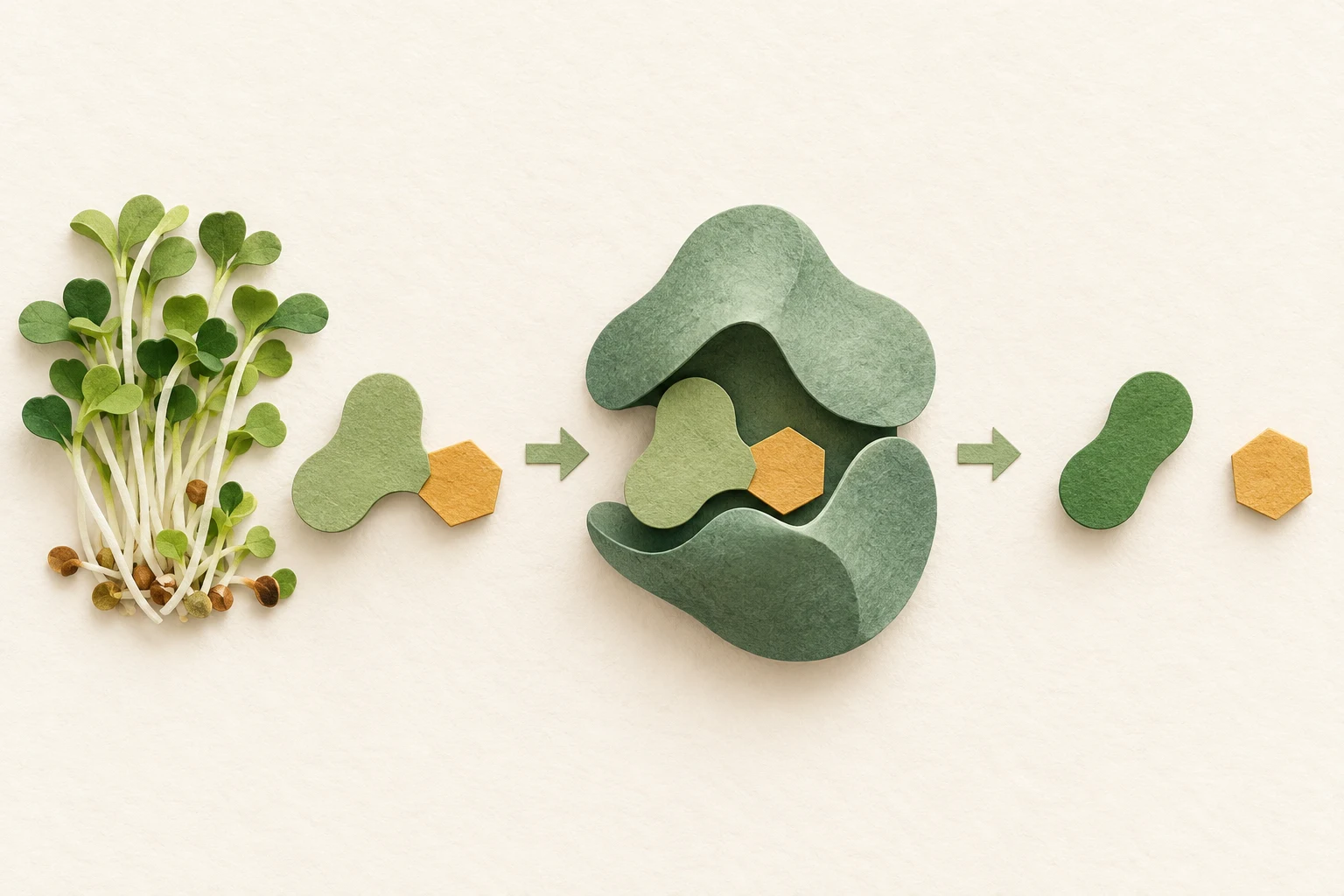
Myrosinase can convert glucoraphanin to sulforaphane. Concept model of precursor, enzyme, and product.
Sources [7]
References
Oct 19, 2026 sources reviewed
- Zhang et al. (2004) · Keap1 Is a Redox-Regulated Substrate Adaptor Protein for a Cul3-Dependent Ubiquitin Ligase Complex ↗
Cell experiments on KEAP1 and CUL3 marking Nrf2 for breakdown and regulation by sulforaphane.
- Hu et al. (2011) · Modification of Keap1 Cysteine Residues by Sulforaphane ↗
Mass spectrometry of purified KEAP1 confirmed sulforaphane modification of cysteine sites including C151.
- Thimmulappa et al. (2002) · Identification of Nrf2-regulated Genes Induced by the Chemopreventive Agent Sulforaphane by Oligonucleotide Microarray ↗
Compared small intestine gene expression in normal and Nrf2 deficient mice to identify defense genes responsive to sulforaphane and Nrf2.
- Riedl et al. (2009) · Oral Sulforaphane Increases Phase II Antioxidant Enzymes in the Human Upper Airway ↗
Defense enzyme gene expression measured in nasal lavage cells of healthy adults after broccoli sprout homogenate intake.
- Egner et al. (2014) · Rapid and Sustainable Detoxication of Airborne Pollutants by Broccoli Sprout Beverage: Results of a Randomized Clinical Trial in China ↗
Twelve week trial in 291 adults comparing urinary metabolites of benzene, acrolein, and crotonaldehyde.
- Wise et al. (2016) · Sulforaphane intake and NRF2 response in COPD ↗
Four week trial in 89 COPD patients assessing Nrf2 target genes, inflammation, and lung function. A 2017 correction added funding information.
- Fahey et al. (2015) · Sulforaphane Bioavailability from Glucoraphanin-Rich Broccoli: Control by Active Endogenous Myrosinase ↗
Compared formulations with and without active myrosinase through urinary sulforaphane metabolites in people.
- Malhotra et al. (2010) · Global Mapping of Binding Sites for Nrf2 Identifies Novel Targets in Cell Survival Response through ChIP-Seq Profiling and Network Analysis ↗
Nrf2 DNA binding and gene expression in mouse embryonic fibroblasts, including glutathione, thioredoxin reductase, and sulfiredoxin defense genes.
- Soriano et al. (2008) · Nrf2 activation, sulfiredoxin expression, and peroxiredoxin recovery ↗
Sulforaphane increased Srxn1 expression in cultured neurons. Experiments showing reduced peroxiredoxin hyperoxidation and strong neuroprotection used a separate Nrf2 activator, D3T.
- UniProtKB · Human SOD1 enzyme reaction ↗
Protein database describing SOD1 conversion of superoxide to hydrogen peroxide and oxygen.
- UniProtKB · Human catalase enzyme reaction ↗
Protein database describing catalase conversion of hydrogen peroxide to water and oxygen.
Read next
Explore the Journal →
Research on cellular aging
Sulforaphane and cellular aging: reading the clocks
Explore cell senescence, immune cell responses after exercise, and gene expression based aging clocks through sulforaphane research.

SOD and antioxidant mechanisms
SOD, broccoli sprouts, and sulforaphane
Explore how SOD processes reactive oxygen and how sulforaphane relates to cellular defense genes, including enzyme formulations, human studies, and conversion in broccoli sprouts.

Aging well
Healthy aging: cognition and cellular defense
Explore sulforaphane and healthy aging through a 12 week cognition trial, a 42 month pilot study, and research on glutathione in blood immune cells.
Understanding cells
Cellular recycling: autophagy and sulforaphane
Autophagy encloses, breaks down, and reuses worn cell components. Explore cultured cell research linking sulforaphane with mTOR, TFEB, and ERK signaling.
Sleep and cells
Cellular defenses studied in sleep apnea research
Researchers studied sulforaphane responses in mice exposed to repeated low oxygen and in cultured neurons, examining NRF2, endoplasmic reticulum stress, and brain cell injury.
Understanding ingredients
Phosphatidylserine and sulforaphane in cognitive health research
Phosphatidylserine helps organize cell membrane signaling, while sulforaphane regulates defense genes. Explore their roles and results from human cognition tests.