Research on cellular aging
Sulforaphane and cellular aging: reading the clocks
Explore cell senescence, immune cell responses after exercise, and gene expression based aging clocks through sulforaphane research.

01
From calendar age to cellular state
Aging involves changes in DNA damage, protein clearance, energy producing mitochondria, and signals between cells. Researchers measure these changes to understand how cells and tissues function over time.
Anti aging work aims to slow age related changes; age reversal aims to move an already changed state toward an earlier one. Healthspan is the period of life spent healthy and able to function day to day.
Sulforaphane studies have measured aging markers in cultured cells, tissues and lifespan in animals, and defense responses in human derived cells. Reversal of human biological age has not been clinically established.
02
Metabolism continues in cells that stop dividing
Cellular senescence is a long lasting arrest of division in response to damage or stress. Senescent cells still metabolize and secrete substances. This can prevent damaged cells from proliferating and aid tissue repair, but prolonged accumulation can contribute to inflammation and reduced tissue function.
In 2018, Hariton and colleagues cultured two types of human fibroblasts, MRC-5 and BJ, over a long period. Adding 1 μM sulforaphane at each passage from early culture increased cumulative divisions and delayed senescence related growth arrest in both cell types.
Glucose use also changed. Glucose consumption rose as cultured cells aged, and sulforaphane moderated that rise. MRC-5 cells had lower markers of oxidative DNA and protein damage. The study examined a connection between metabolism and NRF2, which regulates defense gene expression in the nucleus.
In the same MRC-5 cells, 2 μM or higher sulforaphane inhibited growth and showed toxicity.
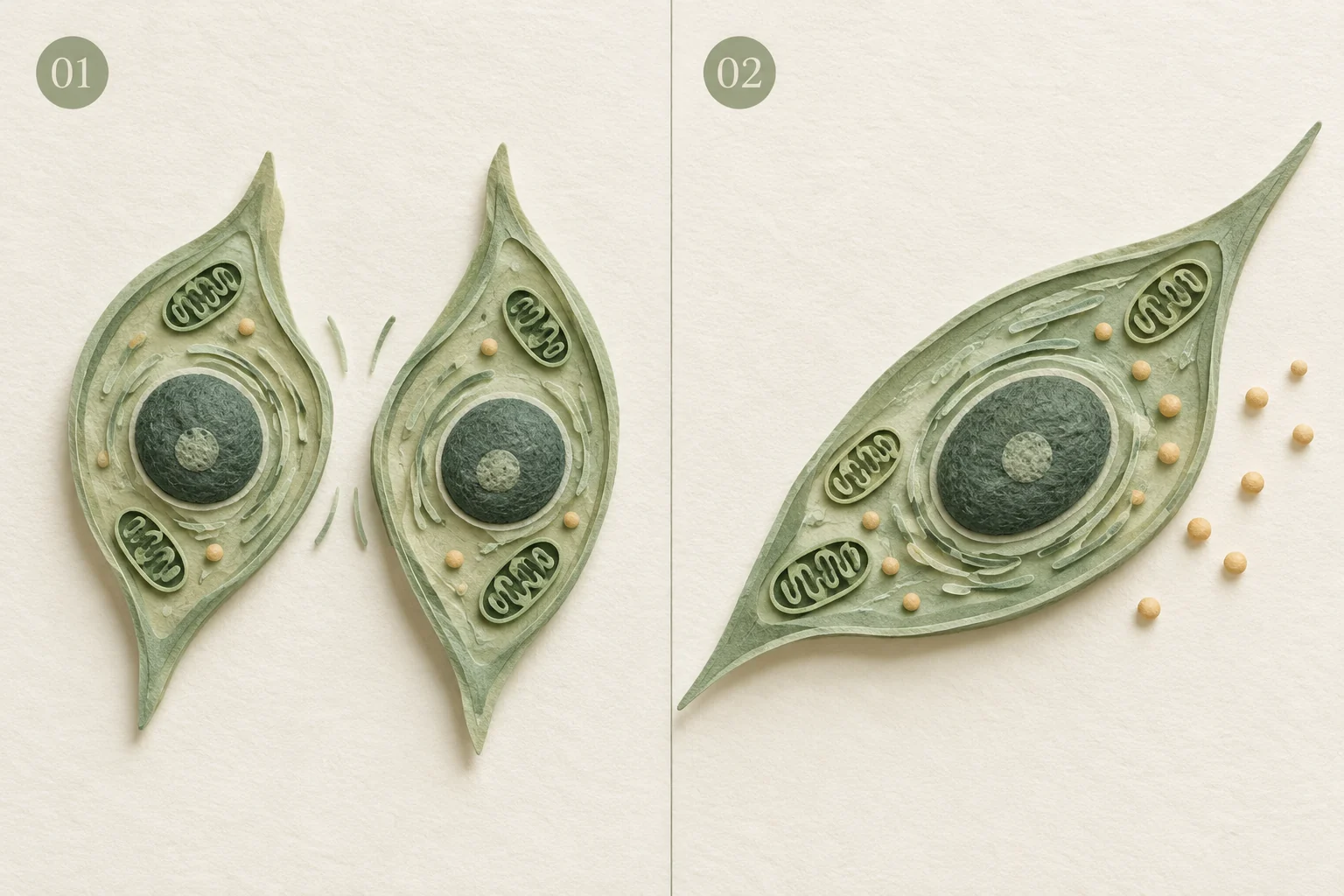
Fibroblast division, metabolism, and secretion.
- Cell division
Fibroblasts divide, increasing cell number.
- Division arrest and metabolism
Metabolism and secretion continue after division stops.
03
Skin research measured defenses and tissue structure
Skin research observes cellular defenses alongside extracellular structures such as collagen.
In 2021, Petkovic and colleagues fed young and 21 month old male mice either a sulforaphane diet or control diet for three months. In the skin of older mice on the sulforaphane diet, NRF2 protein increased and MMP9, associated with oxidative stress and breakdown of tissue components such as collagen, decreased. Collagen fiber structure also improved.
Gene expression of the defense enzymes NQO1 and HO1 rose, but their protein levels did not.
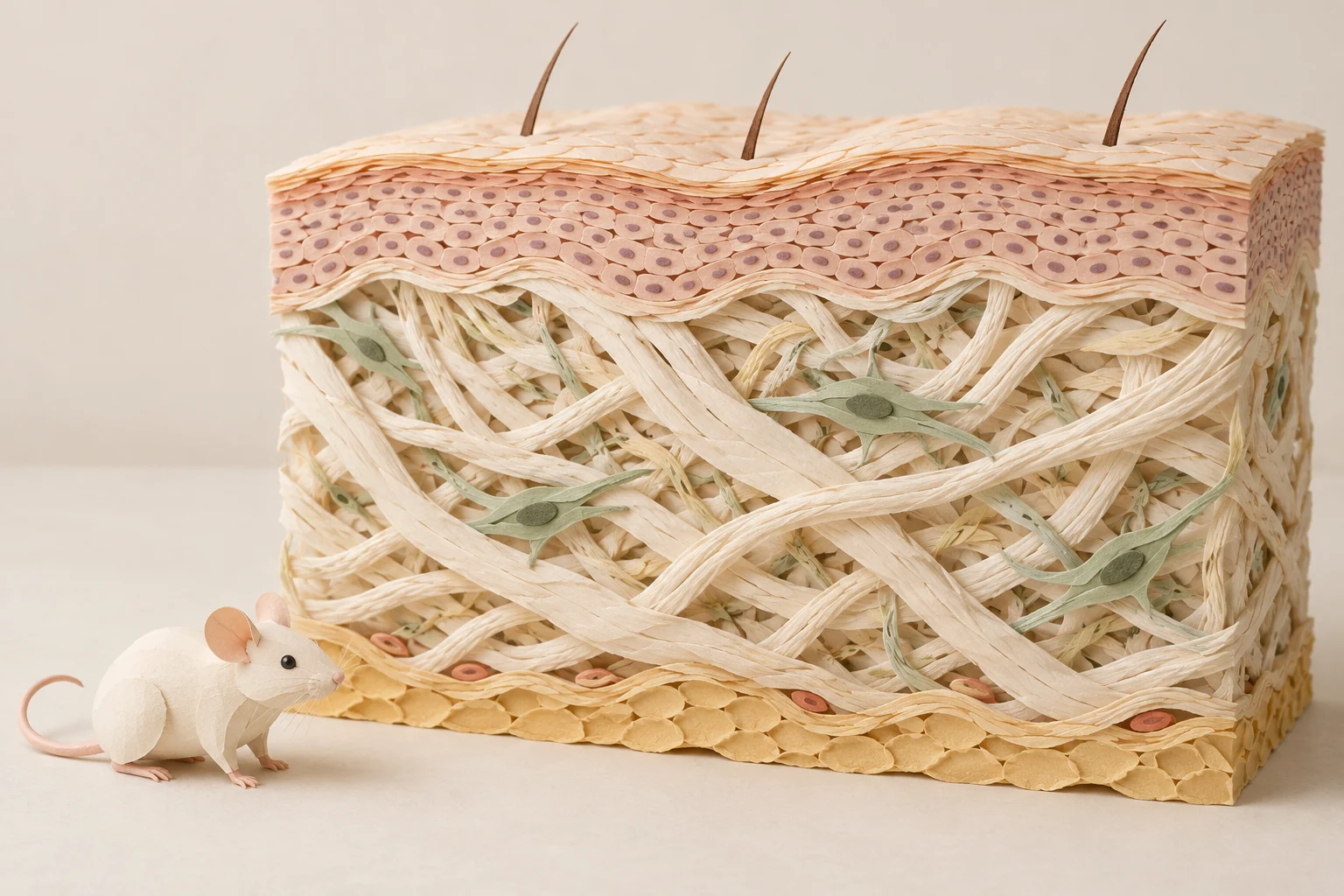
Cells and collagen fiber structure in mouse skin.
Sources [4]
04
Sulforaphane added to immune cells isolated after exercise
Rodriguez and colleagues had 25 adults, average age 67, cycle indoors for 30 minutes. They took blood before and after exercise, isolated immune cells, then compared cultures with or without 5 μM sulforaphane. The study appeared online in 2025 and in a journal issue in 2026.
When post exercise cells received sulforaphane, NRF2 binding activity at defense gene regulatory sites was about 2.1 times the control condition. Sulforaphane treatment of pre exercise cells and untreated post exercise cells each measured about 1.5 times control.
Expression of four defense genes was higher with sulforaphane added to post exercise cells than with exercise alone. It did not differ statistically from sulforaphane treatment alone.
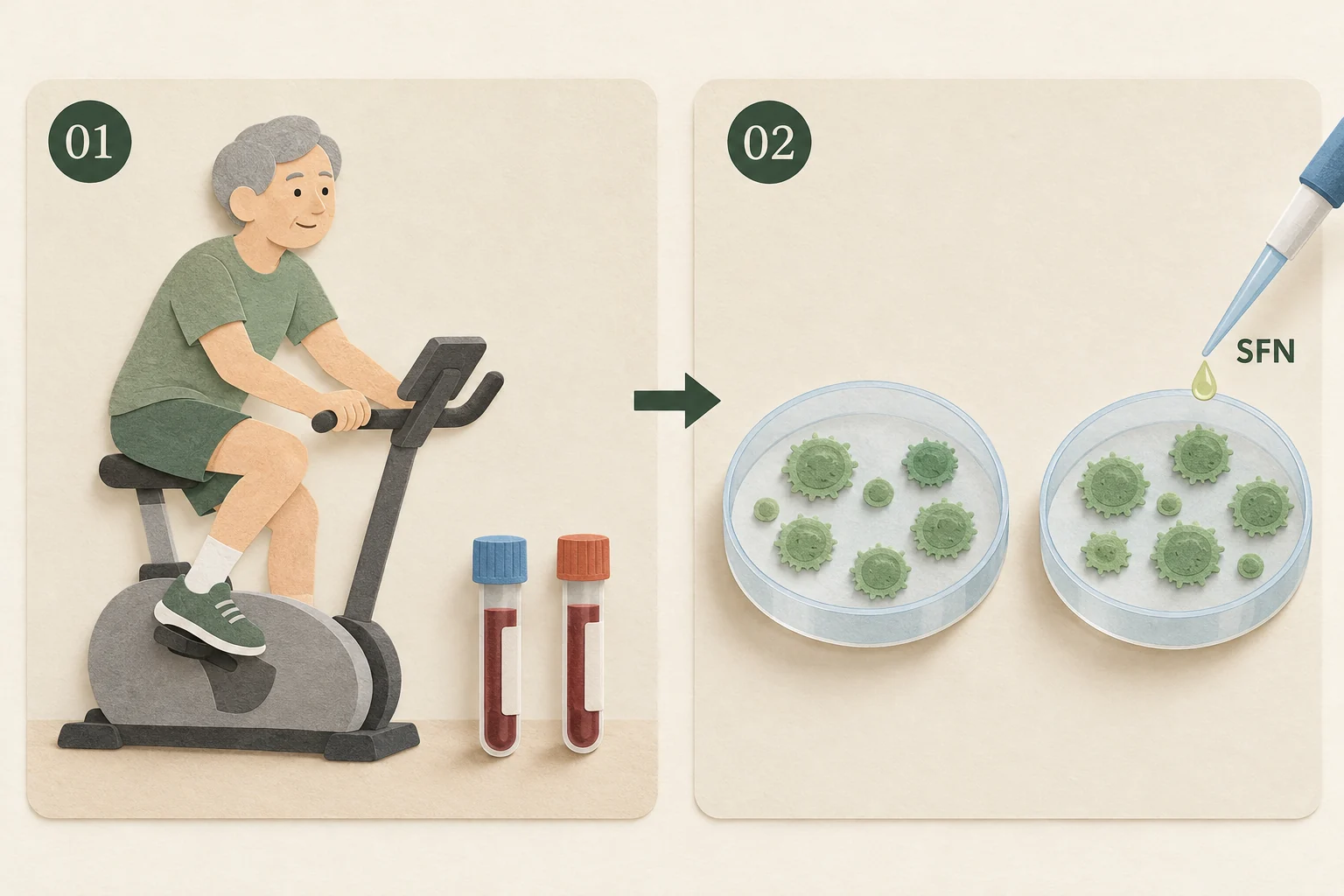
Blood sampling before and after exercise, followed by experiments in isolated immune cells.
- Blood before and after exercise
Blood was collected before and immediately after indoor cycling.
- Treating isolated cells
Immune cells isolated from blood were compared with and without sulforaphane.
Sources [5]
05
Gene activity as an aging clock
Aging clocks estimate age or aging state from patterns of molecular change. Epigenetic clocks measure chemical marks on DNA; transcriptomic clocks measure how actively genes are expressed. Their meaning depends on the data used to build them.
A 2025 bioRxiv preprint by Sedore and colleagues studied the small nematode C. elegans. Worms treated with sulforaphane from early adulthood lived longer. In older worms, overall gene expression was on average closer to a state about four days younger than controls. The team built a transcriptomic aging clock from 311 genes that change consistently with age.
Starting treatment eight or twelve days into adulthood did not extend lifespan.
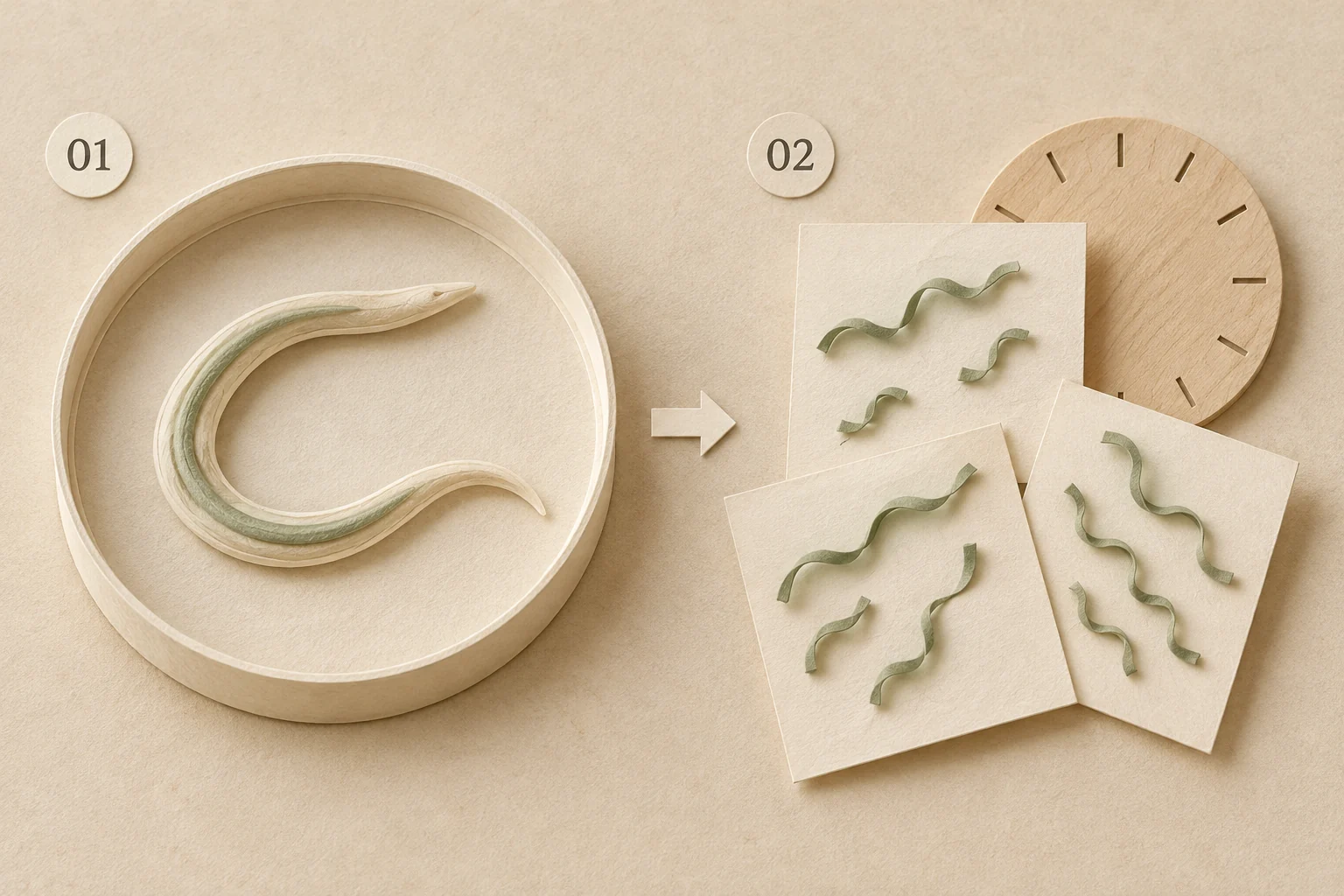
Aging time assessed through gene activity in nematodes.
- C. elegans
A research organism for studying age related gene activity.
- Gene expression patterns
RNA expression data are used to estimate aging state.
Sources [6]
06
Following changes after intake in people
After sulforaphane is eaten, absorption, metabolism, and delivery to tissues also matter. Human studies therefore examine blood metabolites and tissue responses. In 2016, Wise and colleagues gave 89 people with chronic obstructive pulmonary disease (COPD) 25 μmol or 150 μmol sulforaphane, or placebo, daily for four weeks.
Blood metabolites confirmed sulforaphane absorption. However, NRF2 target gene expression did not increase in alveolar macrophages or bronchial epithelial cells; inflammation markers and lung function also did not differ between groups. Unpleasant taste was reported more often in sulforaphane groups.
Sources [7]
References
Oct 19, 2026 sources reviewed
- López-Otín et al. (2023) · Hallmarks of aging: An expanding universe ↗
Review of cellular and molecular changes in aging and how they connect.
- Gorgoulis et al. (2019) · Cellular Senescence: Defining a Path Forward ↗
Consensus statement on cell senescence, division arrest, secretion, and metabolism.
- Hariton et al. (2018) · Sulforaphane and senescence in human fibroblasts ↗
Repeated culture of MRC-5 and BJ cells with 1 μM sulforaphane, measuring division, glucose use, and oxidative damage.
- Petkovic et al. (2021) · Sulforaphane diet and mouse skin aging ↗
Three month dietary experiment in young and old male mice, assessing NRF2 and collagen structure.
- Rodriguez et al. (2026) · NRF2 responses in immune cells isolated after exercise ↗
Immune cells from 25 adults before and after exercise were treated with 5 μM sulforaphane; published online in 2025.
- Sedore et al. (2025) · Sulforaphane and a nematode transcriptomic aging clock ↗
bioRxiv preprint on timing of treatment, lifespan, and gene expression in C. elegans.
- Wise et al. (2016) · Oral sulforaphane trial in COPD ↗
A four week randomized double blind placebo controlled trial in 89 patients measuring airway cell NRF2 targets, inflammation, and lung function.
Read next
Explore the Journal →
Cellular health basics
Sulforaphane and cellular health: how defense works
Explore how sulforaphane relates to cellular defense genes through KEAP1–NRF2 signaling, from reactive oxygen processing and antioxidant regeneration to human studies.

SOD and antioxidant mechanisms
SOD, broccoli sprouts, and sulforaphane
Explore how SOD processes reactive oxygen and how sulforaphane relates to cellular defense genes, including enzyme formulations, human studies, and conversion in broccoli sprouts.

Aging well
Healthy aging: cognition and cellular defense
Explore sulforaphane and healthy aging through a 12 week cognition trial, a 42 month pilot study, and research on glutathione in blood immune cells.
Understanding cells
Cellular recycling: autophagy and sulforaphane
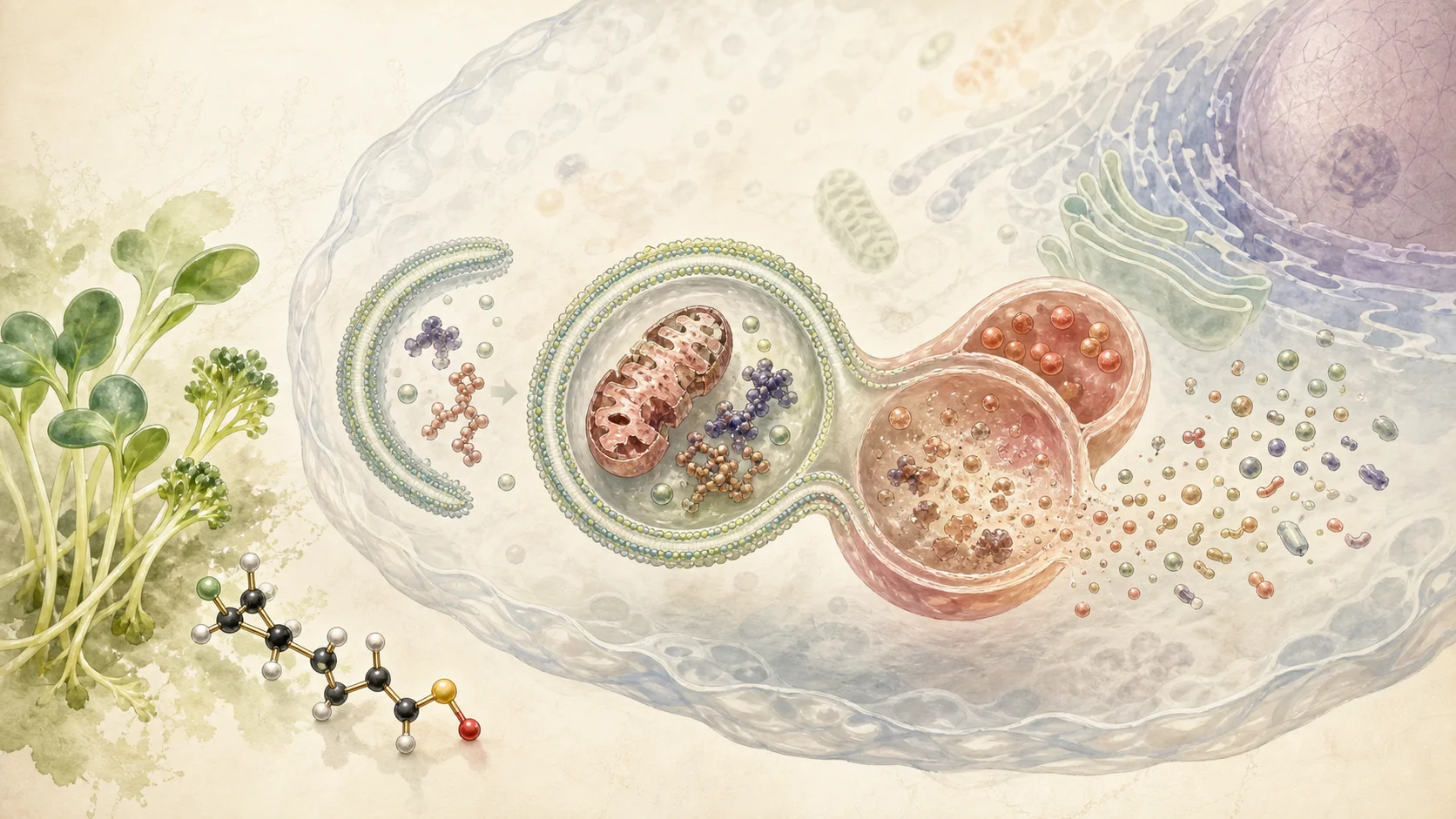
Autophagy encloses, breaks down, and reuses worn cell components. Explore cultured cell research linking sulforaphane with mTOR, TFEB, and ERK signaling.
Sleep and cells
Cellular defenses studied in sleep apnea research
Researchers studied sulforaphane responses in mice exposed to repeated low oxygen and in cultured neurons, examining NRF2, endoplasmic reticulum stress, and brain cell injury.
Understanding ingredients
Phosphatidylserine and sulforaphane in cognitive health research
Phosphatidylserine helps organize cell membrane signaling, while sulforaphane regulates defense genes. Explore their roles and results from human cognition tests.