Antioxidant and cellular defense
Antioxidant & Cellular Defense
Antioxidant defenses protect cells, while benzene metabolites are processed and excreted
After broccoli sprout intake, antioxidant defense gene activity increased. In a separate trial, benzene metabolite excretion was 63.2% higher than placebo in the high dose group.
- 57 participants
- Nasal cell trial completed
- 3 days
- Duration of homogenate intake
- 200g
- Amount of sprouts at the highest dose

Cell Defense Gene · NQO1
Increase from baseline · %
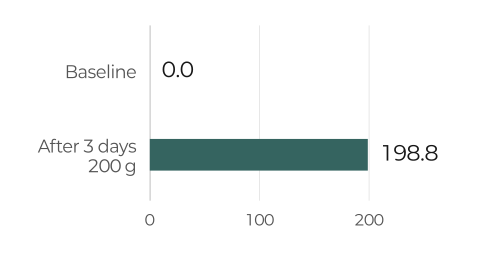
Gene expression in nasal cells
Sprout homogenate · highest dose
Read Riedl · 2009 →View values and units
| Group | Value |
|---|---|
| Baseline | 0.0 |
| After 3 days 200 g | 198.8 |
Urinary Excretion of a Benzene Metabolite
Increase versus placebo · %
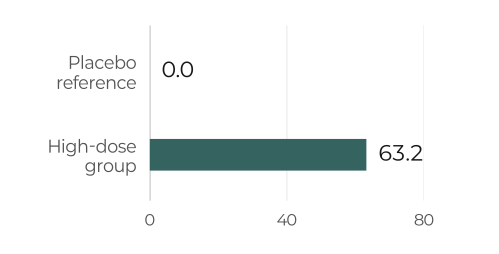
10 days · no difference established at half or one-fifth dose
SFN 40 + GLR 600 μmol/day
Read Chen · 2019 →View values and units
| Group | Value |
|---|---|
| Placebo reference | 0.0 |
| High-dose group | 63.2 |
Antioxidant and cellular defense · research results at a glance
5 studies
Key human studies · cellular defense and excretion markers
| Study and participants | Intake and observation | Findings and context |
|---|---|---|
| Chen · 2019 170 adults exposed to air pollution |
High-dose SFN 40μmol + GLR 600μmol/day · 10 days | High dose group: benzene metabolite excretion increased 63.2%Finding: Urinary excretion of the benzene metabolite SPMA was 63.2% higher than placebo in the high dose group. Context: A measure of metabolism and excretion. Half and one fifth doses did not differ significantly. |
| Riedl · 2009 57 healthy participants completed |
Sprout homogenate equivalent to 25–200g 3 days · nasal cells measured | Increased antioxidant related gene expression in nasal cellsFinding: At the 200 g dose, NQO1 expression increased 198.81% and HO-1 expression increased 120.86%. Context: A change in cellular defense gene expression measured in nasal cells. |
Related human trials · oxidation, inflammation, and lung function
| Study and participants | Intake and observation | Findings and context |
|---|---|---|
| López-Chillón · 2019 40 adults with overweight |
Fresh sprouts 30g/day · 70 days follow-up afterward | Inflammatory marker IL-6: 4.76 → 2.11 pg/mLFinding: The inflammatory marker IL-6 was lower after 70 days of intake than before. Context: Compared inflammatory markers before and after 70 days of intake in overweight adults. |
| Wise · 2016 89 patients with chronic obstructive pulmonary disease |
Sulforaphane 25 or 150μmol/day 4 weeks · placebo controlled | Finding: Between group differences in Nrf2, inflammation, and lung function were not significant in patients with COPD. Context: A two dose, four week trial. Population, tissue, and endpoints differed from the nasal cell study. |
| Bahadoran · 2011 81 assigned / 63 analyzed |
Sprout powder 5 or 10g/day 4 weeks · placebo controlled | Finding: Total antioxidant capacity (TAC) rose, while MDA and the oxidative stress index fell. Context: Short term biomarker results in people with diabetes. Total oxidative status (TOS) did not change. |
Sources
- Chen, et al. Am J Clin Nutr. 2019;110.DOI 10.1093/ajcn/nqz122
- Riedl, et al. Clin Immunol. 2009;130:244-251.DOI 10.1016/j.clim.2008.10.007
- López-Chillón, et al. Clin Nutr. 2019;38.DOI 10.1016/j.clnu.2018.03.006
- Wise et al. PLoS One. 2016;11:e0163716.DOI 10.1371/journal.pone.0163716
- Bahadoran, et al. Eur J Clin Nutr. 2011;65.DOI 10.1038/ejcn.2011.59