Chen · 2019 · The American journal of clinical nutrition
Dose-related benzene excretion response to sprout beverage
Would the benzene metabolite excretion response persist at lower doses of sprout beverage?
Human · randomized placebo-controlled dose trial

Key findings
Difference at the highest dose
Urinary benzene metabolite excretion was 63.2% higher in the highest-dose group than with placebo.
Low dose was not significant
Changes of +11.3% at the half dose and −6.4% at the one-fifth dose were not significant versus placebo.
Dose response in bodily exposure
Median urinary SFN metabolites also varied by dose: 24.6, 10.3, and 4.3μmol at the highest, half, and one-fifth doses, respectively.
Urinary Excretion of a Benzene Metabolite
Increase versus placebo · %
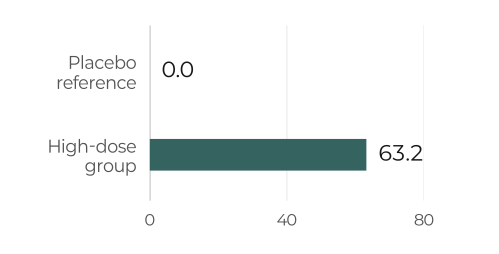
10 days · no difference established at half or one-fifth dose
SFN 40 + GLR 600 μmol/day
Read the original paper and sources ↓View values and units
| Group | Value |
|---|---|
| Placebo reference | 0.0 |
| High-dose group | 63.2 |
Study design
A total of 170 adults were assigned to placebo or one of three beverage dose groups for a 10-day comparison. The highest dose supplied SFN 40μmol and GLR 600μmol daily; half and one-fifth doses were also evaluated.
- Participants
- 170 adults exposed to air pollution
randomized dose trial - Intake and observation
- High-dose SFN 40μmol +
GLR 600μmol/day · 10 days - Measures
- Urinary benzene metabolite SPMA
Study context
This trial examined dose responses in excreted metabolites. The highest-dose group showed a significant difference from placebo.
Original paper and sources
Dose-dependent detoxication of the airborne pollutant benzene in a randomized trial of broccoli sprout beverage in Qidong, China.
- Journal
- The American journal of clinical nutrition · 2019 · 110(3): 675-684
- First published
- 2019-09-01