Egner · 2014 · Cancer prevention research (Philadelphia, Pa.)
Sprout beverage and pollutant excretion markers
Would drinking a broccoli sprout beverage daily change urinary excretion of metabolites of some air pollutants?
Human · 12-week randomized controlled trial

Key findings
Benzene metabolite excretion
Excretion of benzene's glutathione-conjugated metabolite was 61% higher than with placebo. The effect was sustained during the trial.
Different results by compound
Acrolein metabolite excretion was 23% higher, but the same difference was not observed for crotonaldehyde.
Excretion markers measured in urine
Urinary metabolites were the measure assessed.
Excretion of Air Pollutant Metabolites
Increase in urinary excretion versus placebo · %
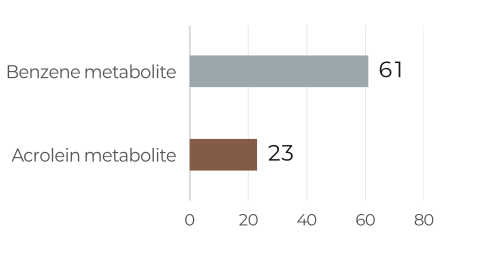
Excretion of each compound’s metabolite
291 participants · 12 weeks
Read the original paper and sources ↓View values and units
| Group | Value |
|---|---|
| Benzene metabolite | 61 |
| Acrolein metabolite | 23 |
Study design
In Qidong, China, 291 adults were compared over 12 weeks with sprout beverage or placebo. The beverage supplied GLR 600μmol and SFN 40μmol daily.
- Participants
- China · 291 adults exposed to air pollution
residents of a polluted area - Intake and observation
- GLR 600μmol/day
+ SFN 40μmol/day
sprout beverage · 12-week placebo comparison - Measures
- Urinary benzene and acrolein metabolites
Study context
A beverage containing GLR and SFN was used to evaluate urinary excretion of air pollutant metabolites.
Original paper and sources
Rapid and sustainable detoxication of airborne pollutants by broccoli sprout beverage: results of a randomized clinical trial in China.
- Journal
- Cancer prevention research (Philadelphia, Pa.) · 2014 · 7(8): 813-823
- First published
- 2014-06-09