Gut and microbiome
Gut & Microbiome
Bowel movements and gut microbiome: changes observed in dietary trials
Bowel discomfort scores were lower after four weeks of broccoli sprout intake. A separate controlled diet study found differences in gut microbiome composition with broccoli and raw daikon radish diets.
- 48 participants
- Bowel movement questionnaire trial
- 4 weeks
- Duration of intake
- 20 g/day
- Amount of each sprout

Constipation Discomfort · Total Questionnaire Score
Mean before and after in the broccoli sprout group · points
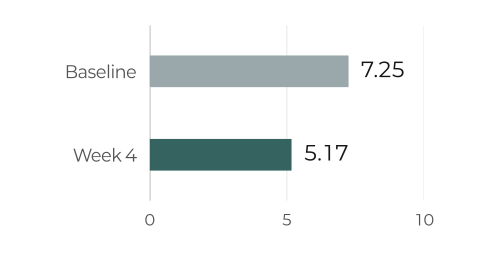
Lower scores indicate less discomfort · within-group comparison
Broccoli sprouts 20 g/day · 24 participants in the intake group
Read Yanaka · 2018 →View values and units
| Group | Value |
|---|---|
| Baseline | 7.25 |
| Week 4 | 5.17 |
Gut Microbiota · Diet Comparison
18-person crossover trial · 18 days per diet
- Gut microbial community
- Different composition
- Between-diet comparison
- p = 0.03
Change in composition observed
Cooked broccoli 200 g + raw daikon radish 20 g/day
Read Kaczmarek · 2019 →Gut and microbiome · research results at a glance
5 studies
Key human studies · bowel movements and gut environment
| Study and participants | Intake and observation | Findings and context |
|---|---|---|
| Yanaka · 2024 Mild ulcerative colitis |
Sprouts 20 g/day · eight weeks Alfalfa control · mesalazine treatment | Observed decrease in a fecal inflammation markerFinding: Fecal calprotectin fell and some bacterial groups increased in the sprout group. Context: A dietary intervention alongside mesalazine treatment. Clinical disease activity did not change. |
| Kaczmarek · 2019 18 healthy participants |
Cooked broccoli 200 g + raw radish 20 g/day · 18 days per diet | Difference in gut microbiome composition by dietFinding: Gut microbiome community composition differed between broccoli and control diets (p = 0.03). Context: The diets compared broccoli and raw daikon radish; the endpoint was community composition. |
| Yanaka · 2018 48 healthy adults with bowel discomfort |
Broccoli and alfalfa sprouts 20g/day · 4 weeks | Bowel discomfort total score: 7.25 → 5.17Finding: The broccoli sprout group’s mean bowel discomfort score fell from 7.25 to 5.17 over four weeks. Context: These are within group means, with lower scores indicating less discomfort. Time spent trying was assessed by questionnaire. |
Related human studies · gastric mucosa and individual responses
| Study and participants | Intake and observation | Findings and context |
|---|---|---|
| Dwibedi · 2025 89 adults with prediabetes assigned |
SFN 150μmol/day · 12 weeks extract 35 / placebo 39 participants | Finding: The gut microbiome’s preexisting conversion capacity was associated with sulforaphane exposure and glucose response. Context: An exploratory analysis of individual conversion capacity and response. |
| Yanaka · 2009 Adults with H. pylori infection |
Broccoli sprouts 70 g/day Eight weeks · alfalfa control | Finding: Bacterial colonization and gastric inflammation markers fell, then rose again after intake stopped. Context: An eight week trial of adults with Helicobacter infection measuring colonization and inflammation markers. |
Sources
- Yanaka, et al. Funct Foods Health Dis. 2024;14.DOI 10.31989/ffhd.v14i10.1440
- Kaczmarek, et al. J Nutr Biochem. 2019;63:27-34.DOI 10.1016/j.jnutbio.2018.09.015
- Yanaka A. J Clin Biochem Nutr. 2018;62:171-179.DOI 10.3164/jcbn.17-42
- Dwibedi, et al. Nat Microbiol. 2025;10.DOI 10.1038/s41564-025-01932-w
- Yanaka et al. Cancer Prev Res. 2009;2:353-360.DOI 10.1158/1940-6207.CAPR-08-0192