Yanaka · 2018 · Journal of clinical biochemistry and nutrition
Sprout intake and bowel discomfort questionnaire
Would adding broccoli sprouts change questionnaire scores in healthy adults with bowel discomfort?
Human · two-sprout comparison trial

Key findings
Questionnaire total score in the intake group
The broccoli sprout group's mean total score decreased from 7.25 to 5.17. Lower scores indicate less discomfort; this is a within-group before-and-after comparison.
Time spent attempting a bowel movement
The questionnaire score for time spent attempting a bowel movement also improved.
Changes in fecal microbiota
The proportion of fecal Bifidobacterium decreased.
Constipation Discomfort · Total Questionnaire Score
Mean before and after in the broccoli sprout group · points
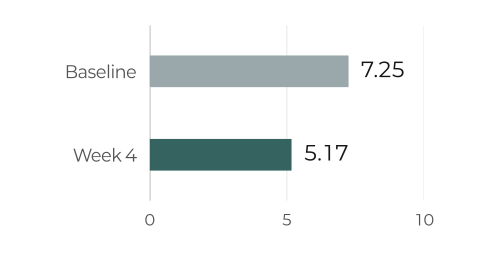
Lower scores indicate less discomfort · within-group comparison
Broccoli sprouts 20 g/day · 24 participants in the intake group
Read the original paper and sources ↓View values and units
| Group | Value |
|---|---|
| Baseline | 7.25 |
| Week 4 | 5.17 |
Study design
Forty-eight healthy adults were assigned, 24 each, to broccoli sprouts or alfalfa sprouts. They consumed 20g/day for four weeks; bowel questionnaires and fecal microbiota were evaluated.
- Participants
- 48 healthy adults with bowel discomfort
two sprout types compared - Intake and observation
- Broccoli and alfalfa sprouts
20g/day · 4 weeks - Measures
- Constipation Scoring System (CSS) · fecal microbiota
Study context
A sprout comparison trial in healthy adults with bowel discomfort. Lower questionnaire scores indicate less discomfort.
Original paper and sources
Daily intake of broccoli sprouts normalizes bowel habits in human healthy subjects.
- Journal
- Journal of clinical biochemistry and nutrition · 2018 · 62(1): 75-82
- First published
- 2017-11-03