Wang · 2022 · Molecular nutrition & food research
Biomarker changes in tissue before breast cancer surgery
Would a short period of sprout extract intake before surgery change biomarkers in breast tumor tissue?
Human · pre-surgery randomized controlled trial

Key findings
Changes in breast tissue before surgery
In the extract group, the cell-proliferation marker Ki-67 tended to decrease, while apoptosis and tumor-infiltrating lymphocytes tended to increase. Between-group differences in tissue biomarkers were not statistically significant.
Ki-67 · Before and After Extract Intake
Median tissue Ki-67 H-score
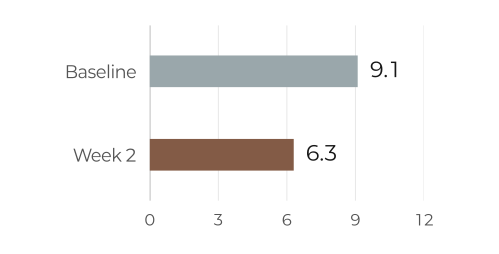
Within-group p = 0.22 · between-group p = 0.21 · neither significant
Tissue biomarker before surgery
Read the original paper and sources ↓View values and units
| Group | Value |
|---|---|
| Baseline | 9.1 |
| Week 2 | 6.3 |
Study design
Among 30 postmenopausal patients with breast cancer who completed the trial, two weeks of intake were compared. The intervention was ITC-rich sprout extract supplying 200μmol ITC/day or placebo; breast tissue and urine were analyzed before and after intake.
- Participants
- United States · 30 postmenopausal patients with breast cancer
before surgery · placebo-controlled trial - Intake and observation
- Sprout extract ITC 200μmol/day
2 weeks · tumor tissue comparison - Measures
- Ki-67 · apoptosis and tissue markers
Study context
Extract was compared with placebo for two weeks before breast cancer surgery, with tissue and urinary biomarkers analyzed before and after intake.
Original paper and sources
A Presurgical-Window Intervention Trial of Isothiocyanate-Rich Broccoli Sprout Extract in Patients with Breast Cancer.
- Journal
- Molecular nutrition & food research · 2022 · 66(12): e2101094
- First published
- 2022-05-06