Chien · 2025 · Metabolites
Oral GLR and curcumin and skin defense genes
Do oral glucoraphanin and curcumin elicit a cellular defense gene response in human skin?
Human · randomized trial of three compounds

Key findings
NQO1 expression response
Skin NQO1 mRNA, with baseline set to 1, rose 3.1-fold with GLR, 3.3-fold with curcumin, and 3.6-fold with the combination.
Compound detected in skin
SFN and its metabolites were detected in the skin of some GLR consumers, alongside changes in several inflammation-related genes.
Erythema and blood measures were not significant.
There were no significant changes in erythema after UV exposure or in the same markers in blood cells.
Cell Defense Gene · NQO1
GLR group · relative expression, baseline = 1
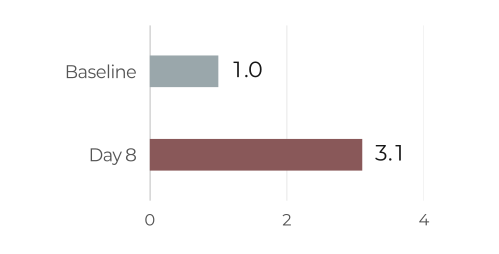
Skin gene response
GLR 450 mg/day · 6 participants in this group
Read the original paper and sources ↓View values and units
| Group | Value |
|---|---|
| Baseline | 1.0 |
| Day 8 | 3.1 |
Skin NQO1 Response by Ingredient
Relative expression, baseline = 1
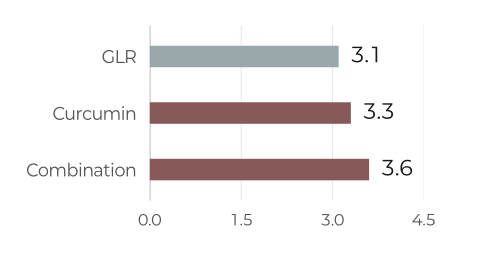
6 participants per group · post-UV erythema change was not significant
8 days of intake · skin gene response
Read the original paper and sources ↓View values and units
| Group | Value |
|---|---|
| GLR | 3.1 |
| Curcumin | 3.3 |
| Combination | 3.6 |
Study design
Eighteen healthy adults were assigned in groups of six to GLR 450 mg/day, curcumin 1 g/day, or both. Skin biopsies, UVB-exposed sites, and blood measures were compared before and after eight days of intake.
- Participants
- 18 healthy participants / six per group
GLR, curcumin, or both - Intake and observation
- GLR 450 mg/day or
curcumin 1 g/day or both
oral intake for eight days - Measures
- Skin NQO1 · post-UV erythema
Study context
Six participants per group received GLR, curcumin, or both, and skin gene responses were compared.
Original paper and sources
Oral Glucoraphanin and Curcumin Supplements Modulate Key Cytoprotective Enzymes in the Skin of Healthy Human Subjects: A Randomized Trial.
- Journal
- Metabolites · 2025 · 15(6): 360
- First published
- 2025-05-29