Alumkal · 2015 · Investigational new drugs
Early trial of PSA in recurrent prostate cancer
What was the PSA response in patients with recurrent prostate cancer who took sulforaphane-rich sprout extract?
Human · uncontrolled phase II trial

Key findings
PSA decline and rate of rise
One of 20 participants had a PSA decrease of at least 50%, so the primary endpoint was not met. The exploratory PSA doubling time lengthened from 6.1 months before intake to 9.6 months during the trial.
PSA Doubling Time · Exploratory Result
PSA doubling time · months
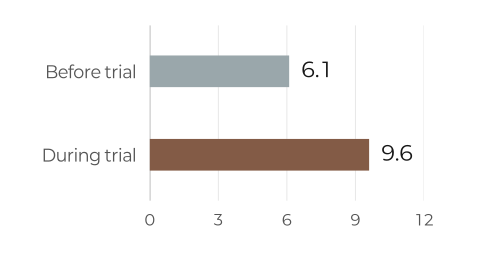
Uncontrolled comparison · primary endpoint not met
Only 1 of 20 participants had a PSA decline of at least 50%
Read the original paper and sources ↓View values and units
| Group | Value |
|---|---|
| Before trial | 6.1 |
| During trial | 9.6 |
Study design
Twenty men with recurrent prostate cancer consumed sulforaphane 200μmol/day for up to 20 weeks. The primary endpoint was the proportion with a PSA decrease of at least 50%; there was no placebo control group.
- Participants
- United States · 20 patients with recurrent prostate cancer
early trial without a comparison group - Intake and observation
- Sulforaphane 200μmol/day
sprout extract · up to 20 weeks - Measures
- PSA response · PSA doubling time
Study context
PSA is a prostate-related biomarker. The primary endpoint was not met; PSA doubling time was analyzed as an exploratory measure.
Observed during intake: No dose-limiting toxicity was observed during the trial.
Original paper and sources
A phase II study of sulforaphane-rich broccoli sprout extracts in men with recurrent prostate cancer.
- Journal
- Investigational new drugs · 2015 · 33(2): 480-489
- First published
- 2014-11-29